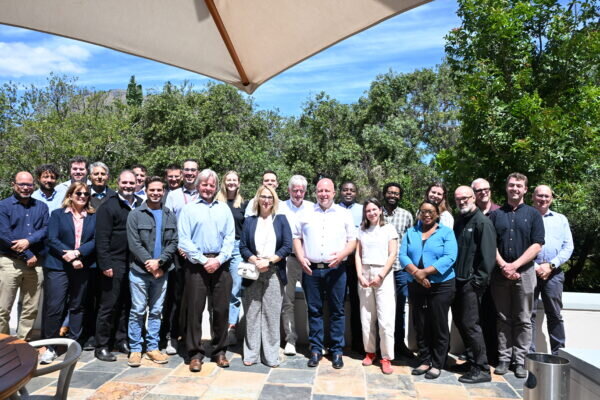
As part of the HyREC²A project, the challenges at the interface of water, energy and food systems (WEF Nexus) are addressed in cooperation with local network partners. The core approach here is the collaborative and interdisciplinary exchange between South African and Bavarian partners in teaching and research. The aim is to establish a mutual transfer of knowledge regarding the role of renewable energy systems in overcoming the energy and water crises. One promising approach, for example, is the combination of hybrid energy systems from agrivoltaics and the energy-efficient utilisation of invasive biomass.
Key Data
- Short title: HyREC²A
- Research focus: Sustainable Production and Energy Technologies
- Runtime: 15.11.2024 - 14.11.2027
- Sponsor: Bavarian State Chancellery
- Project leadership: Prof. Dr. Tobias Bader, Dr. Johanna Mahr-Slotawa
Objectives
The HyREC²A project has the following three objectives:
- Establishment of sustainable cooperation networks of universities, non-governmental organizations (NGOs) and industrial partners between Bavaria and South Africa in the field of renewable energies for solutions at the interface of water, energy and food systems (WEF Nexus).
- Systematic identification and initiation of joint research projects in the Western Cape region in the following focus areas:
- Increasing the security of the municipal electricity supply and identifying the potential for new value chains through decentralised energy supply with hybrid renewable energy systems,
- Analysing of the effects of a decentralised power supply using renewable hybrid energy systems through energy system simulations,
- Improving the availability of groundwater and the water supply through the energetic use of invasive plant species,
- Increasing the efficiency of agriculture through water-saving agrivoltaics,
- Determining the potential for carbon management approaches with bioenergy.
- Development, testing and implementation of a joint lecture module focusing on renewable energy solutions within the WEF Nexus, using the Collaborative Online International Learning (COIL) approach [1].
- Students from South Africa and Bavaria work together in mixed teams across borders to solve the problem-based tasks relating to the WEF Nexus that have been identified within the network,
- Students who, for personal or financial reasons, are unable to take part in traditional exchange programmes have the opportunity to develop intercultural skills and build an international network,
- The module is designed in such a way that it can be extended in future to cover other priority countries of the Bavarian development cooperation in Africa,
- The practical implementation involves therefore, setting up a central COIL facility equipped with the necessary digital technologies at Deggendorf Institute of Technology and Stellenbosch University.
Project Partner: Stellenbosch University
Associate Industry Partners: Maschinenring Foundation; Kraftanlagen Energies & Services; Phaesun; Solar Cooling Engineering; SASSCAL.
[1] Technical University of Berlin (2024): COIL in the context of internationalization of universities. Accessed on 29 September 2026: https://www.tu.berlin/bzhl/ressourcen-fuer-ihre-lehre/ressourcen-nach-themenbereichen/coil-im-kontext-von-internationalisierung-der-hochschulen
News